Transtectonics InConstruction - Benenson Center
Worlds,
2025
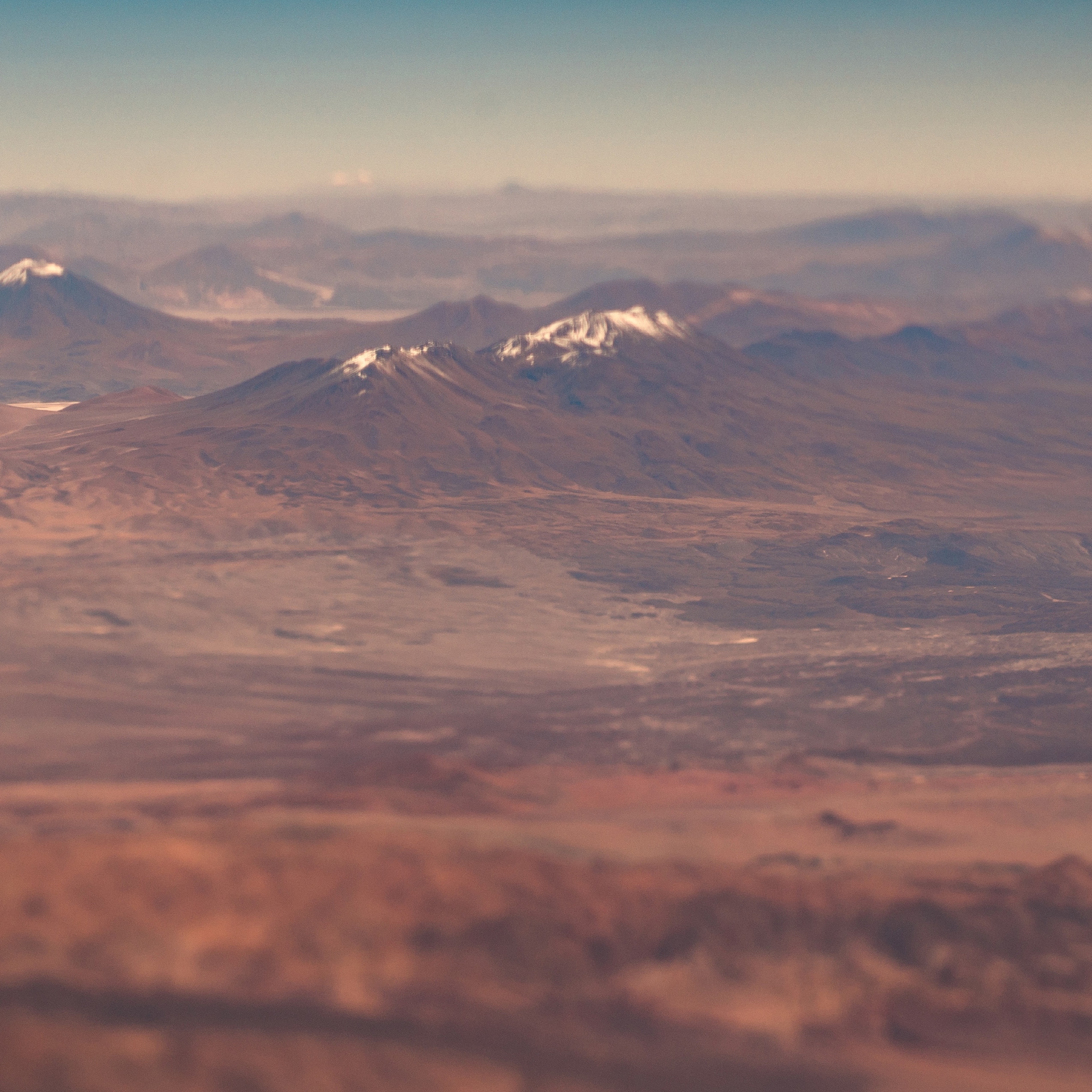
1. GEOLOGICAL PROCESSES
VENTIFACTS
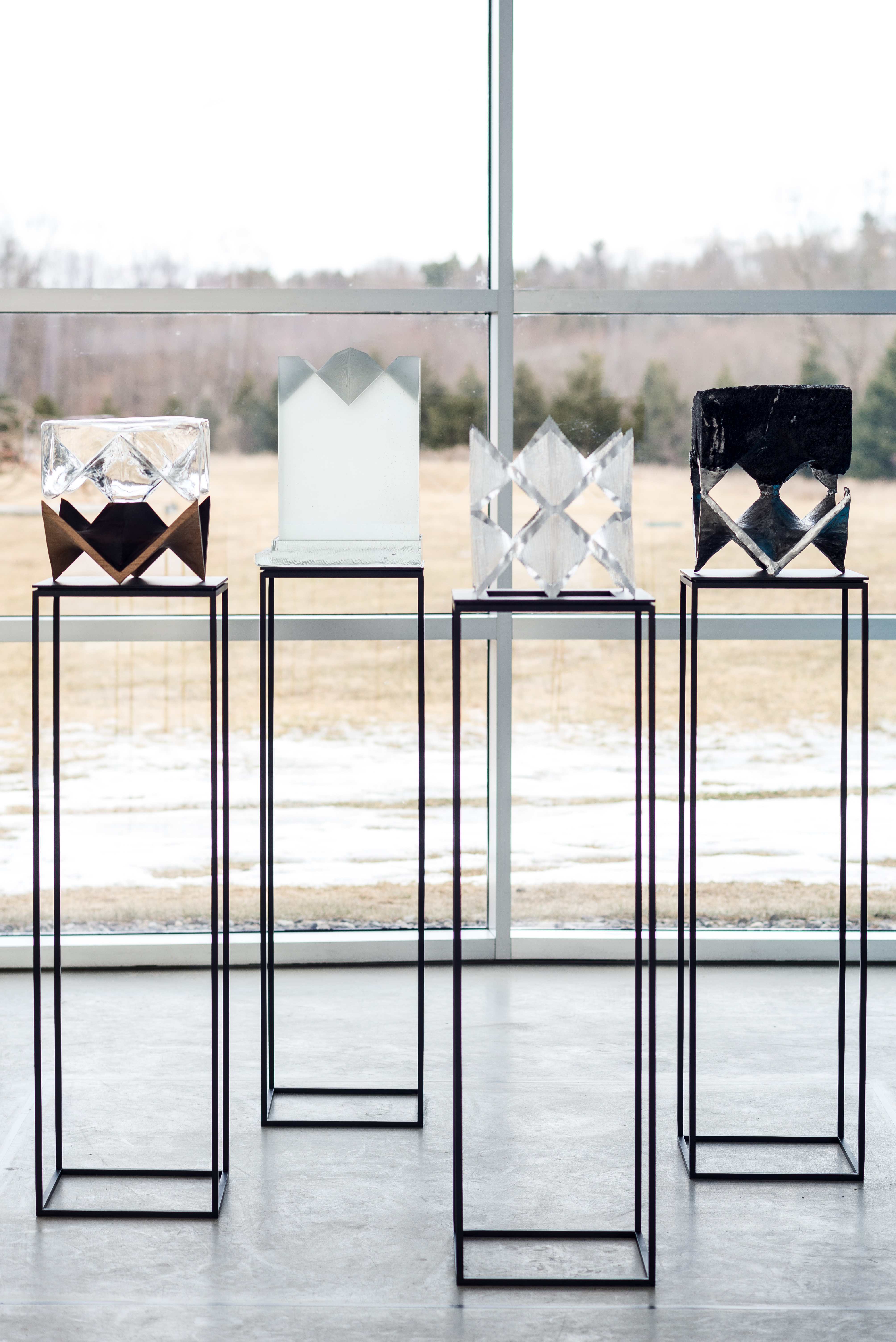
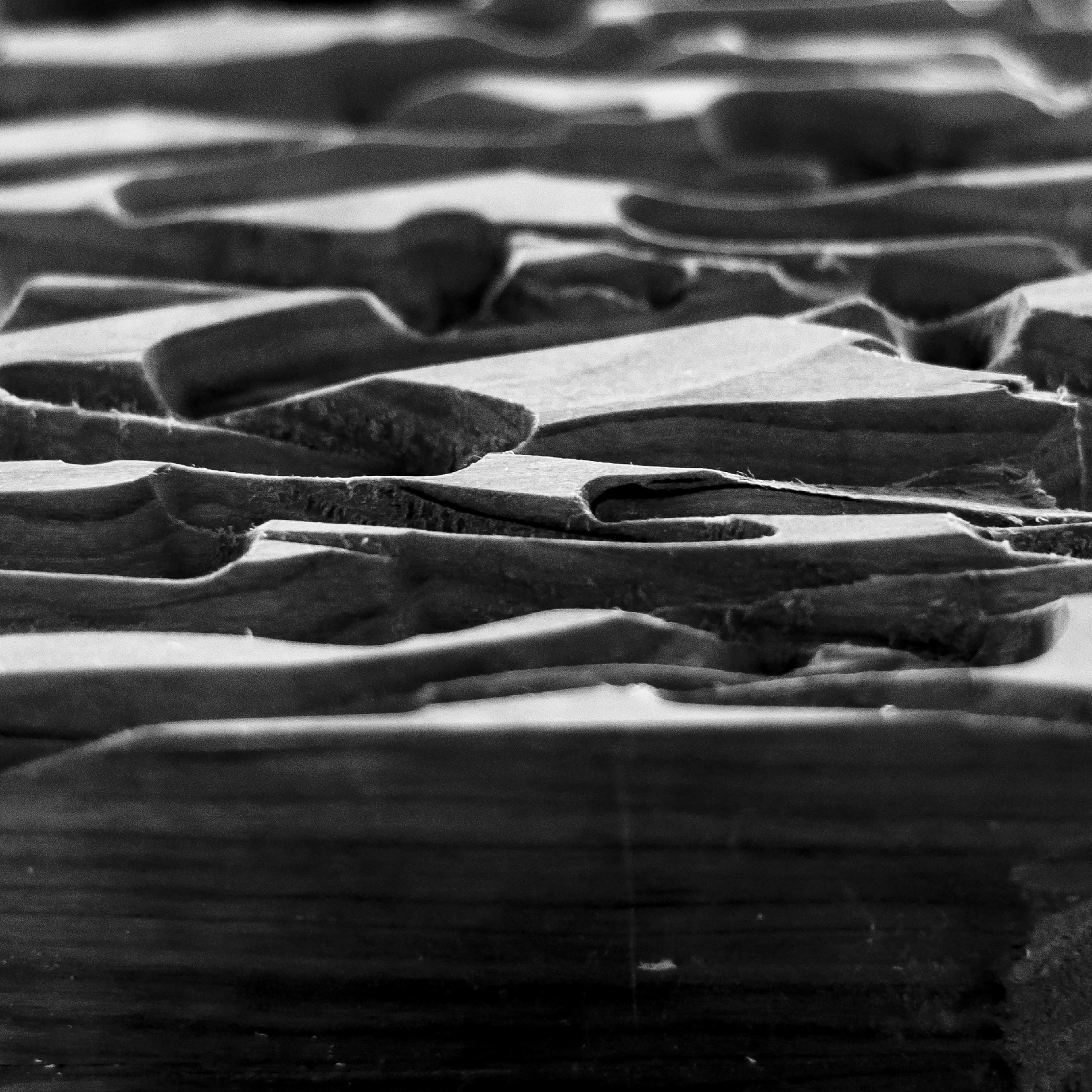
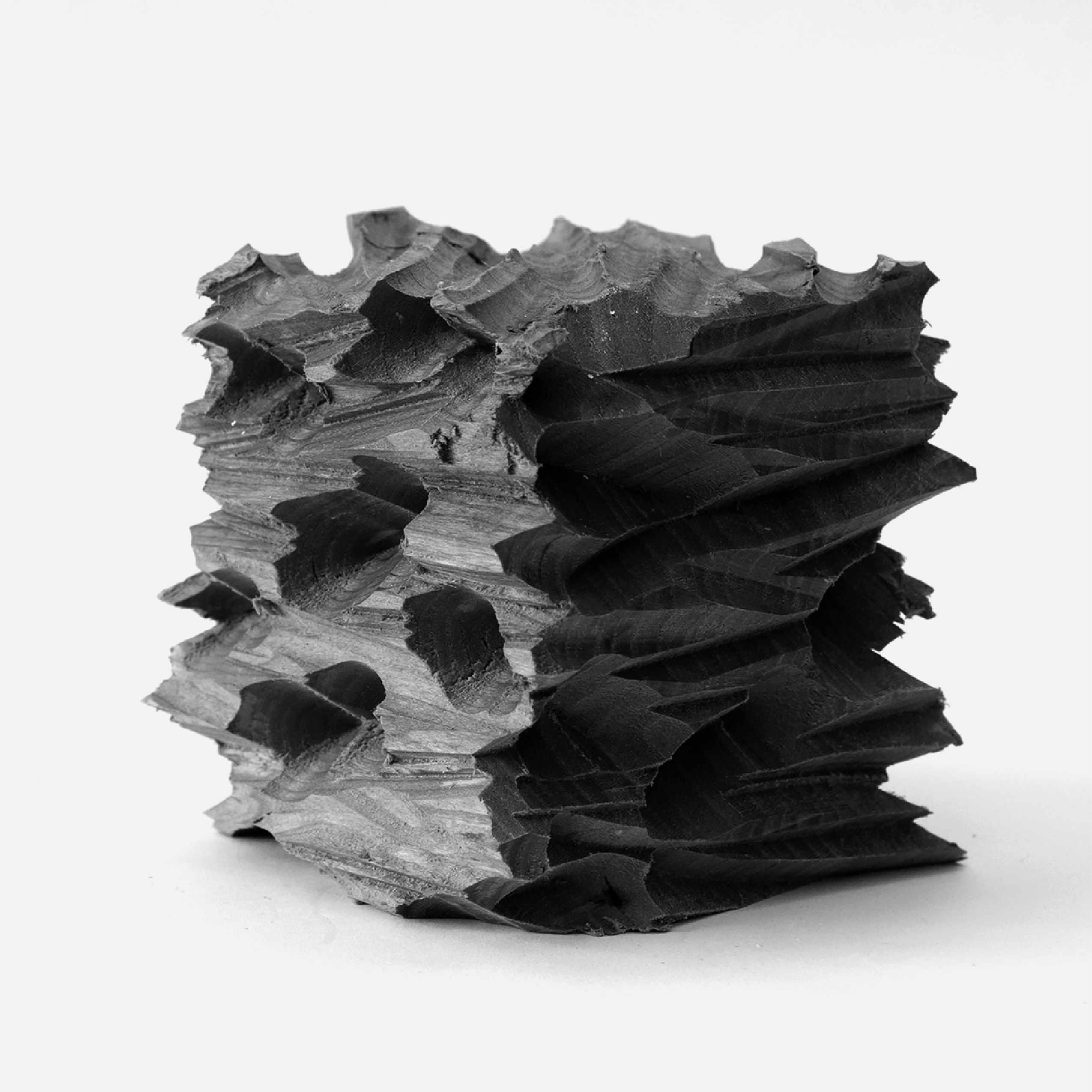
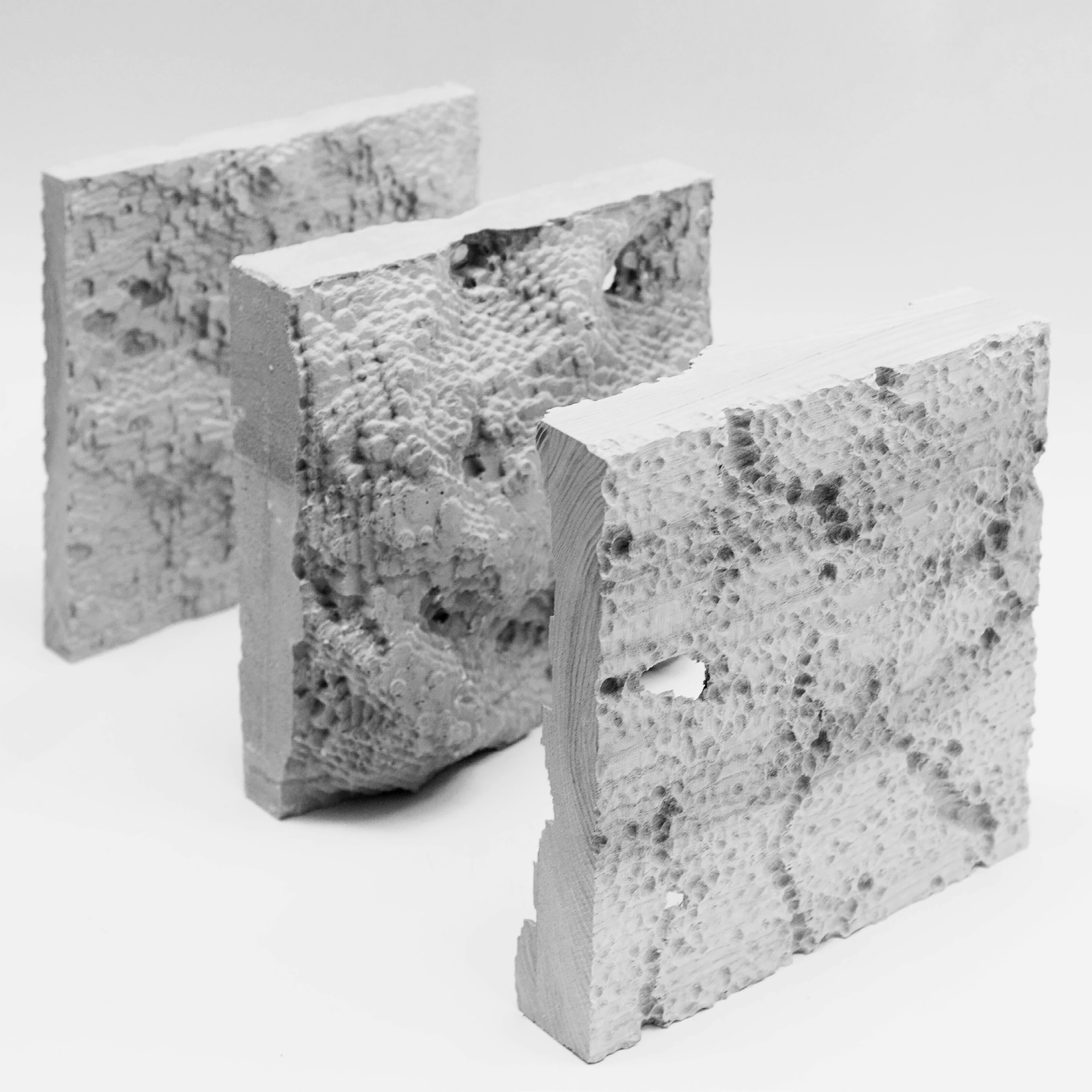
This project was driven by the analysis of aeolian landscapes, focused primarily on the wind erosion of solid matter. Over the course of centuries wind picks up dust and silt, carving flutes, channels and pockets out of rock, creating ventifacts. This project abstracts this process through the production of three cube-like ventifacts, representing three distinct moments in time. These distinct timelines were translated into different tool paths, which guided a single engraving tool bit. The single bit follows these tool paths to generate a variety of geometries which range from shallow overlapping cuts, craters, and long deep cuts. The final objects render these distinct surface conditions, each originating from a same tool.
GLACIO-FLUVIAL AND AEOLIAN LANDSCAPES
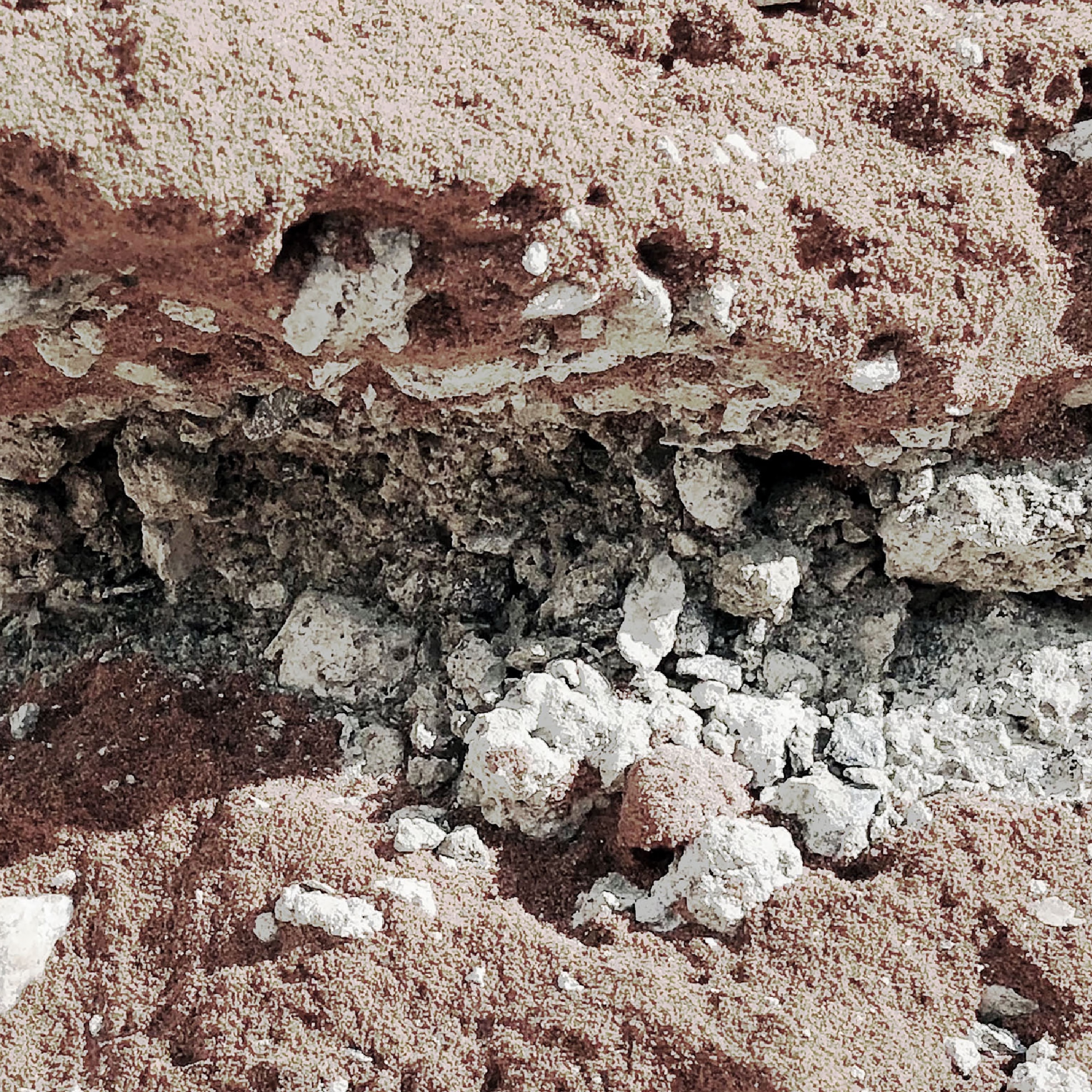
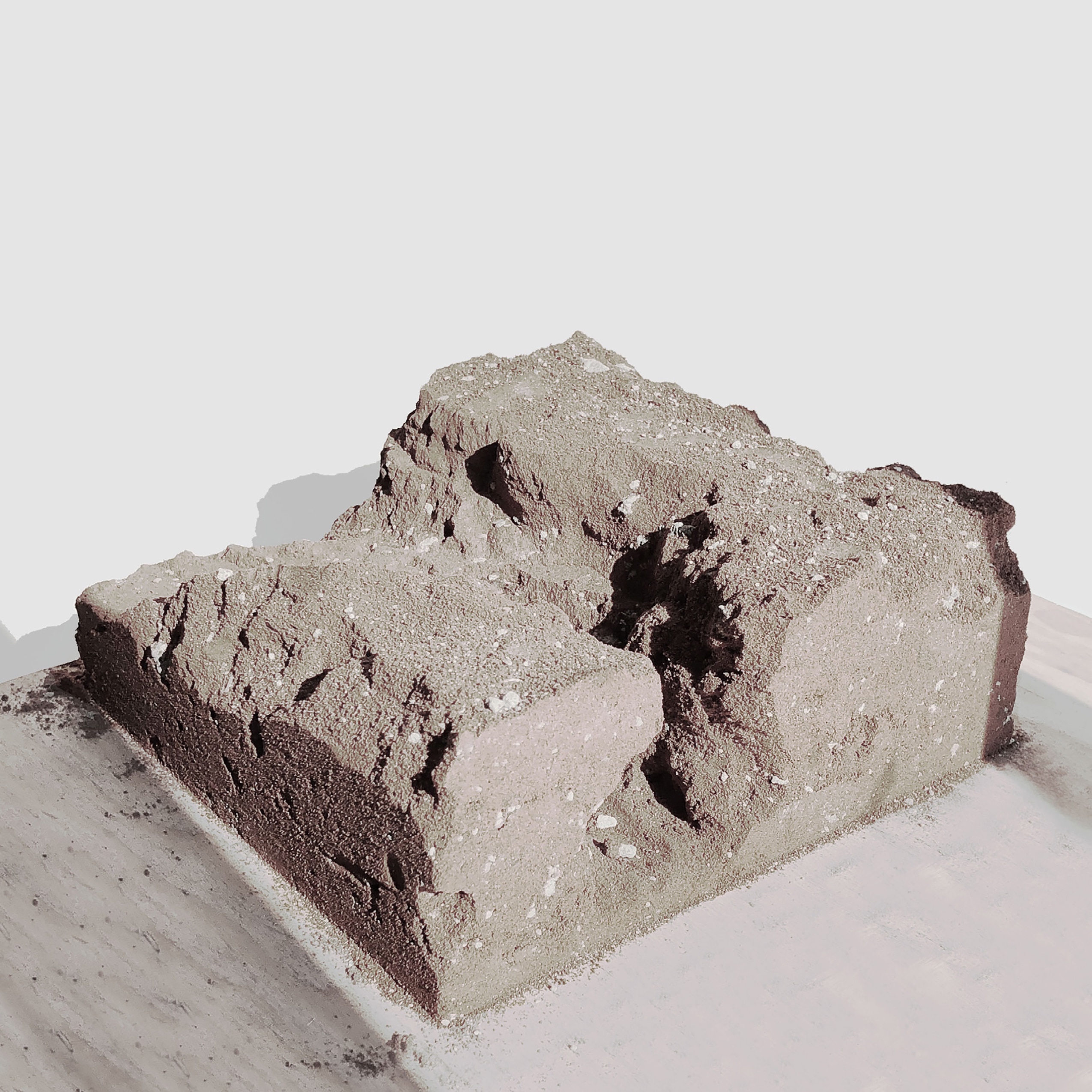
Glaciofluvial and Aeolian Landscapes are formed by erosional processes involving ice and water. The spatial and textural character of these formations was interrogated using an analog modeling process that manipulated materials of varied density and texture. The process was developed to simulate a catastrophic event. The massive forces applied, and the resulting failure and removal of material was simulated via applied flow of compressed air (...) Slower erosion like methods led to predictable, smoother results. In contrast, simulating the catastrophic failure of a mountainside provides a radical departure from predicted results.
TRANSLATIONS THROUGH SURFACES
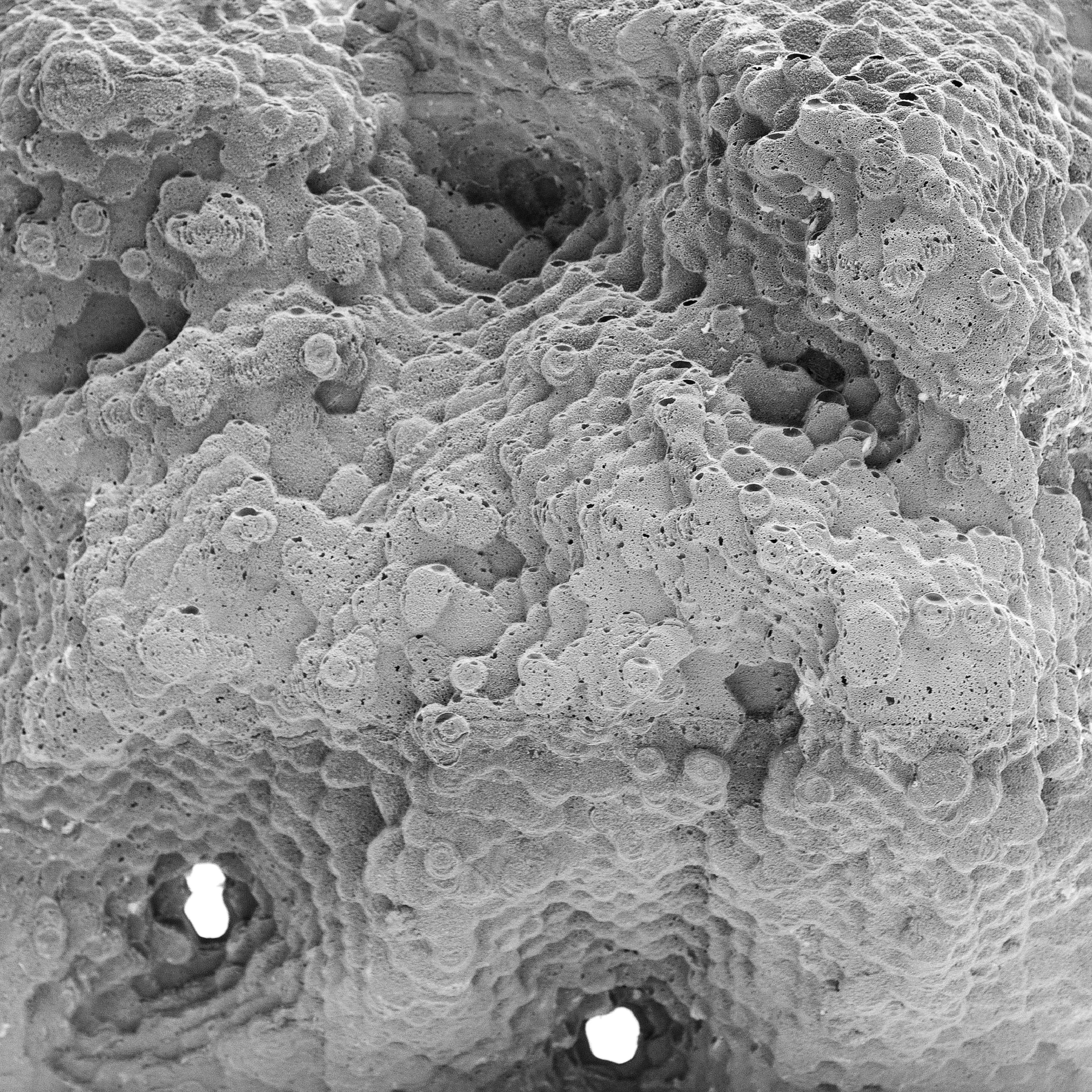
Taking karst landscapes as a point of departure, this series explores an artificial means of constructing a similar landscape, using one random input mesh to construct a variety of three-dimensional representations that, when combined, create new interstitial spaces. The project represents the same forces (mesh densities abstracted to represent soil densities) through surfaces that represent porosity and stalactite and stalacmite growths.
2. EXTRACTION PROCESSES
MECHANIZED TRANSLATIONS
This project interrogates capacities, latent and explicit in terms of quality and quantity. Applied to extractive logics in mining, the capacities of the road-head cutting machine and the overburden spreader are drawn and categorized, building an archive of capacities for each machine for later comparison.

MACHINE TEXTURE AND PATTERN
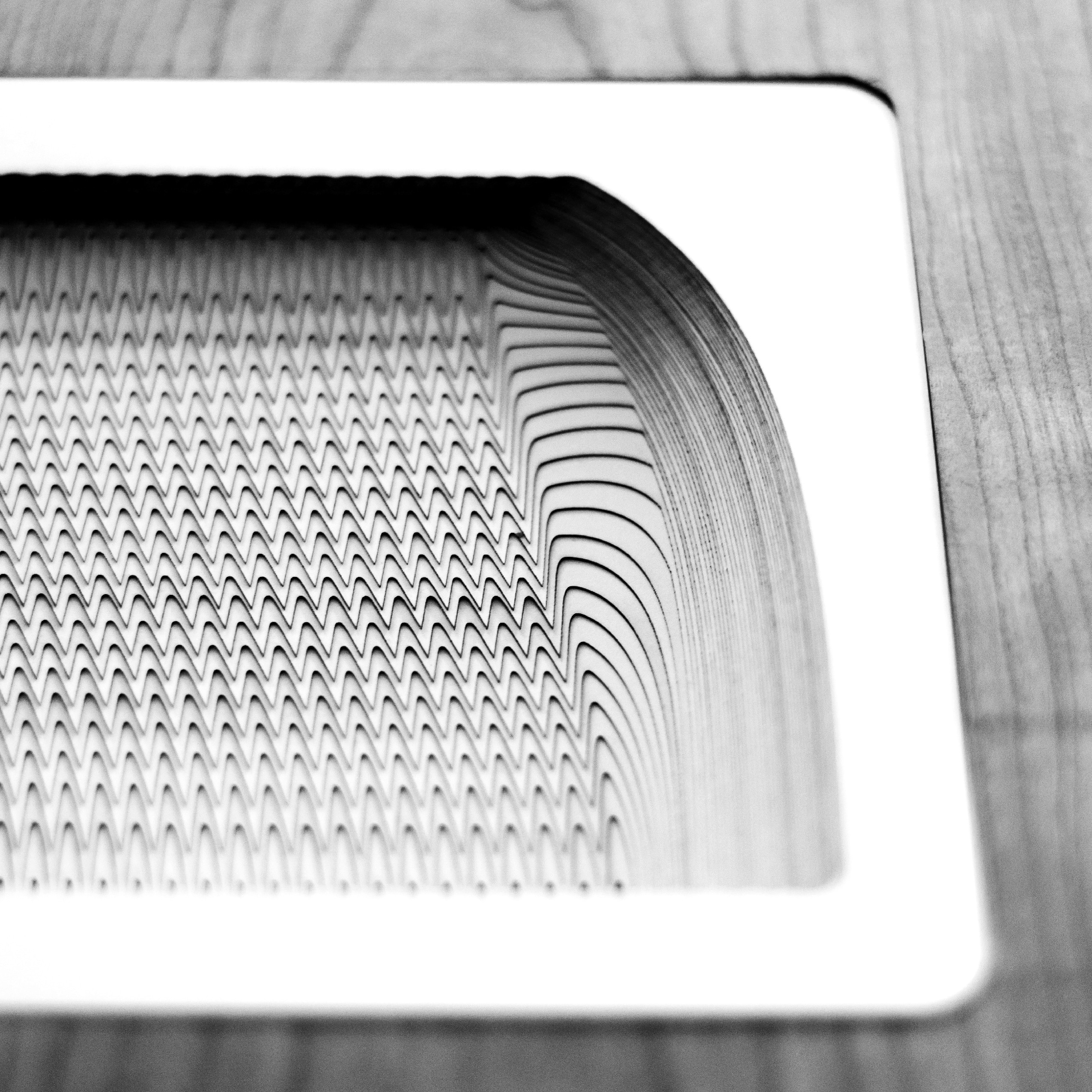
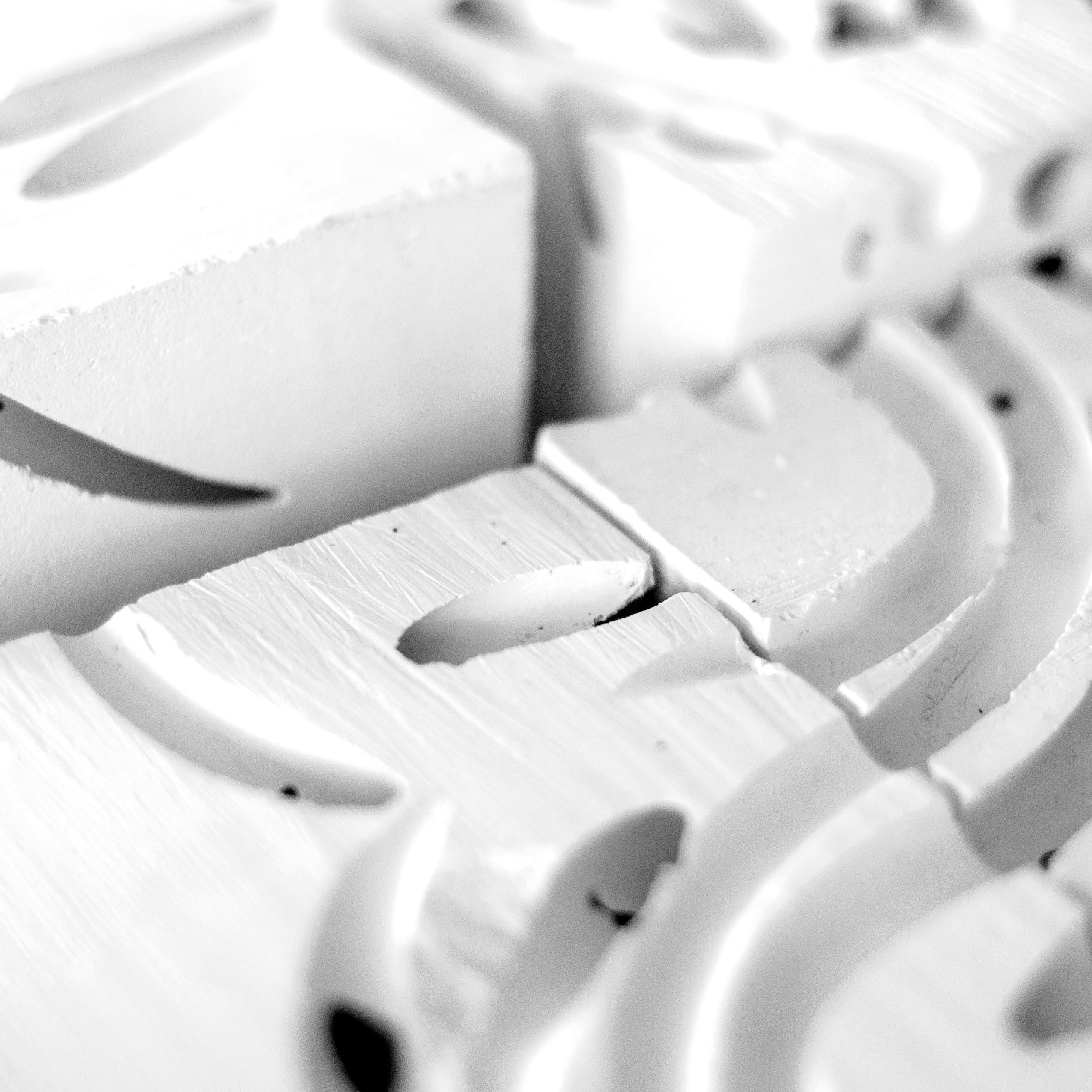
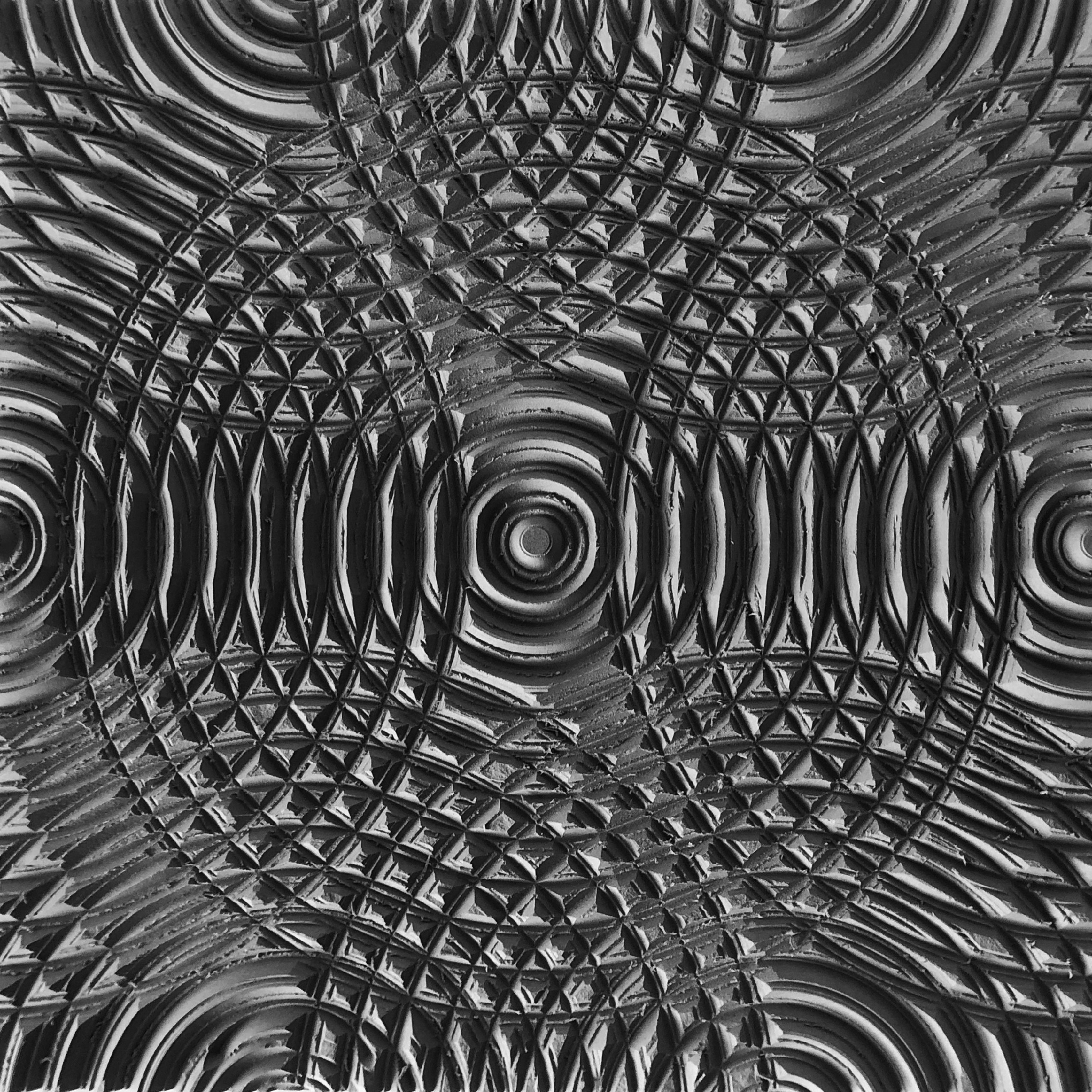
The continuous boring mining machine was studied, focusing on the creation of patterns and textures it creates at a variety of scales. The scale of the cutting bit, the scale of the room, and the scale of the landscape were investigated separately. The machine, a treaded array of rotating cutting heads, was conceptually modified to create curves and climbs. The heads rotating at different speeds would introduce distinct frictional forces and introduce shear to the machine’s typical straight, horizontal cutting method.
TRANSLATIONS ACROSS SCALES
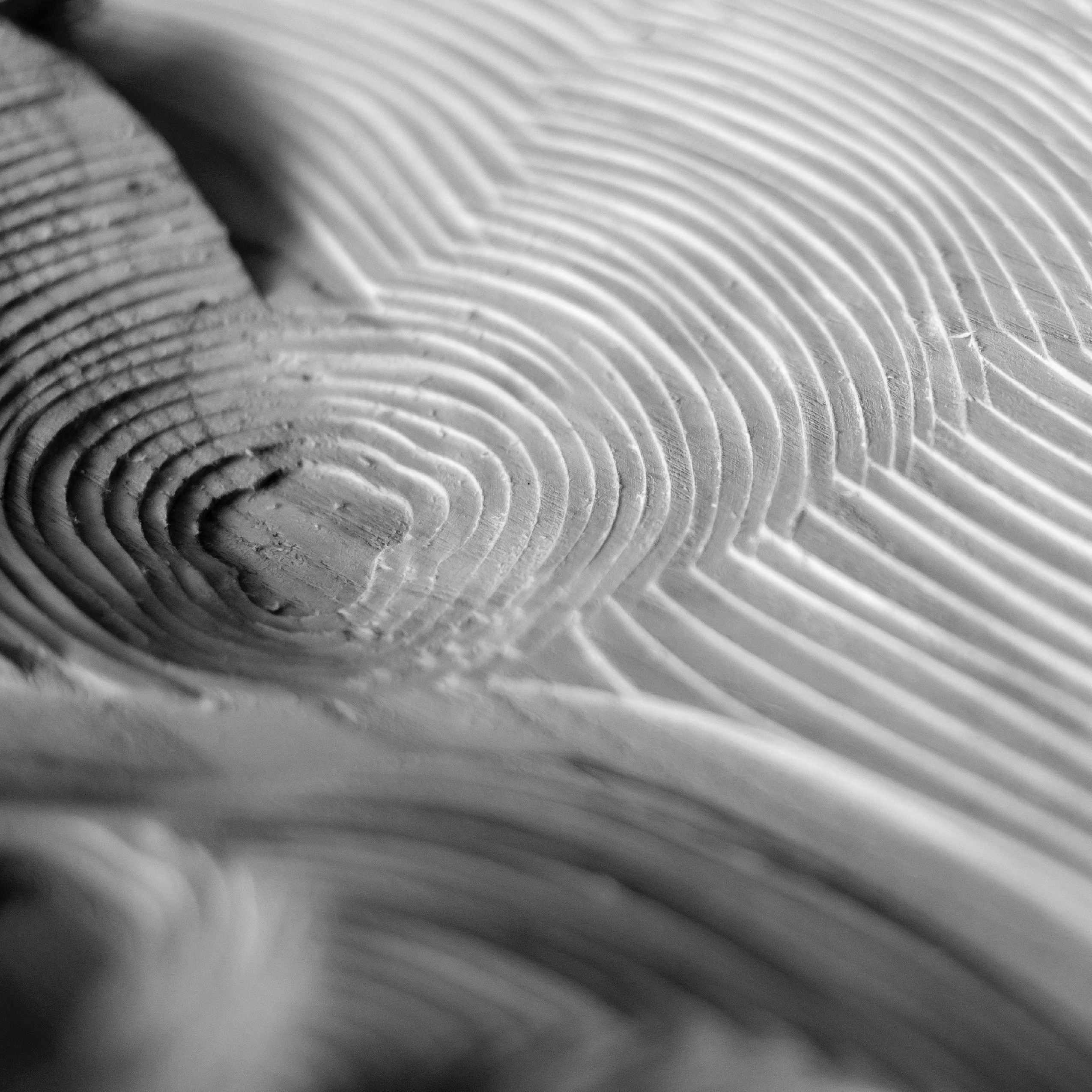
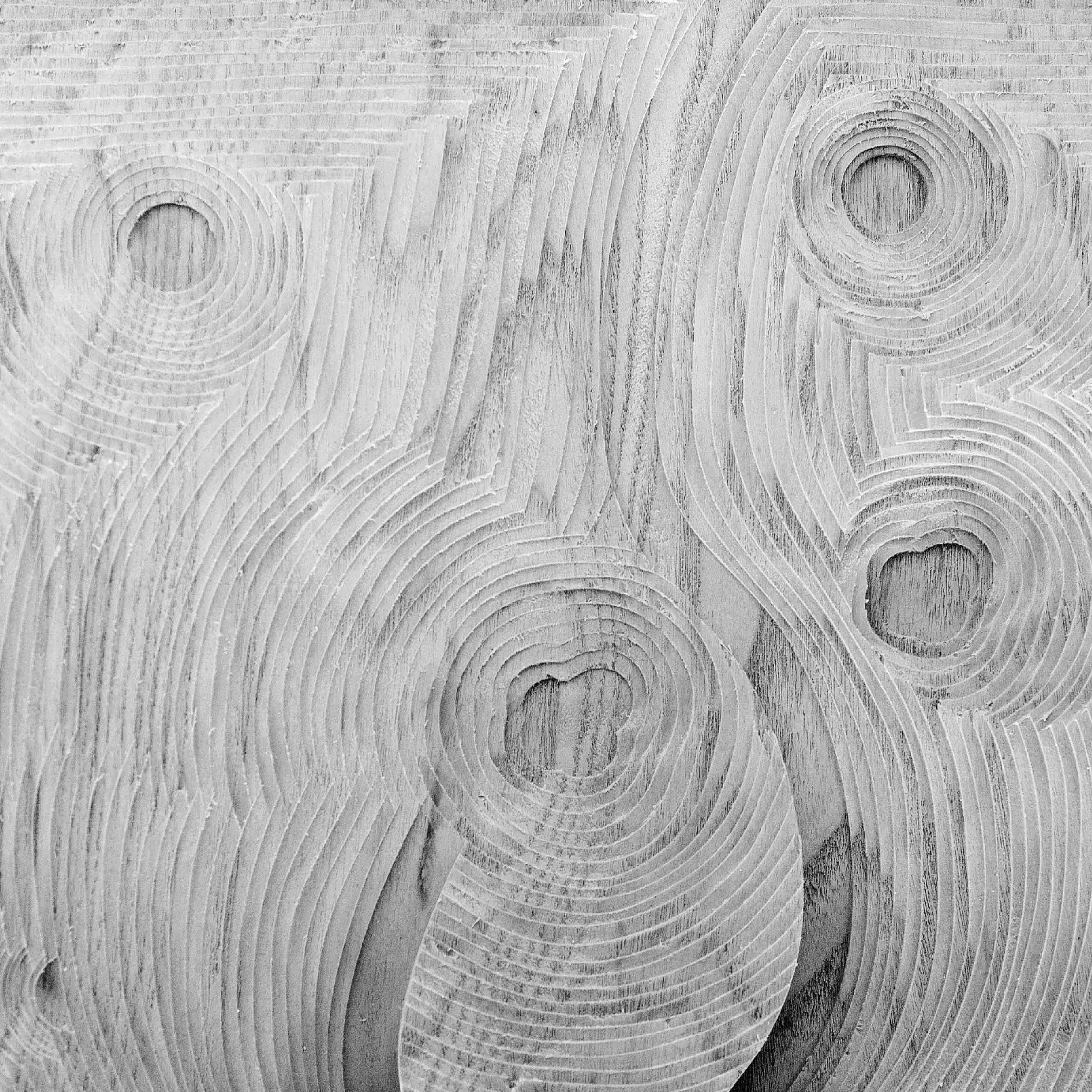
This exercise begins with the abstraction of machine operations into CNC router tool paths, explored at successive scales of resolution. The series begins with a broad view of two systems of operation, one which represents strip mining processes and the other open pit mining. These two, when viewed from afar, blend together to appear as one single process. With each successive “zoom,” new information added to the tool paths (developed in both section and plan) shows differences between the two processes. In the final set, the translations of each tool path to the smallest scale make two, once congruous processes, seem entirely opposed.
3. CONSTRUCTION PROCESSES
TULOR’S PUZZLE
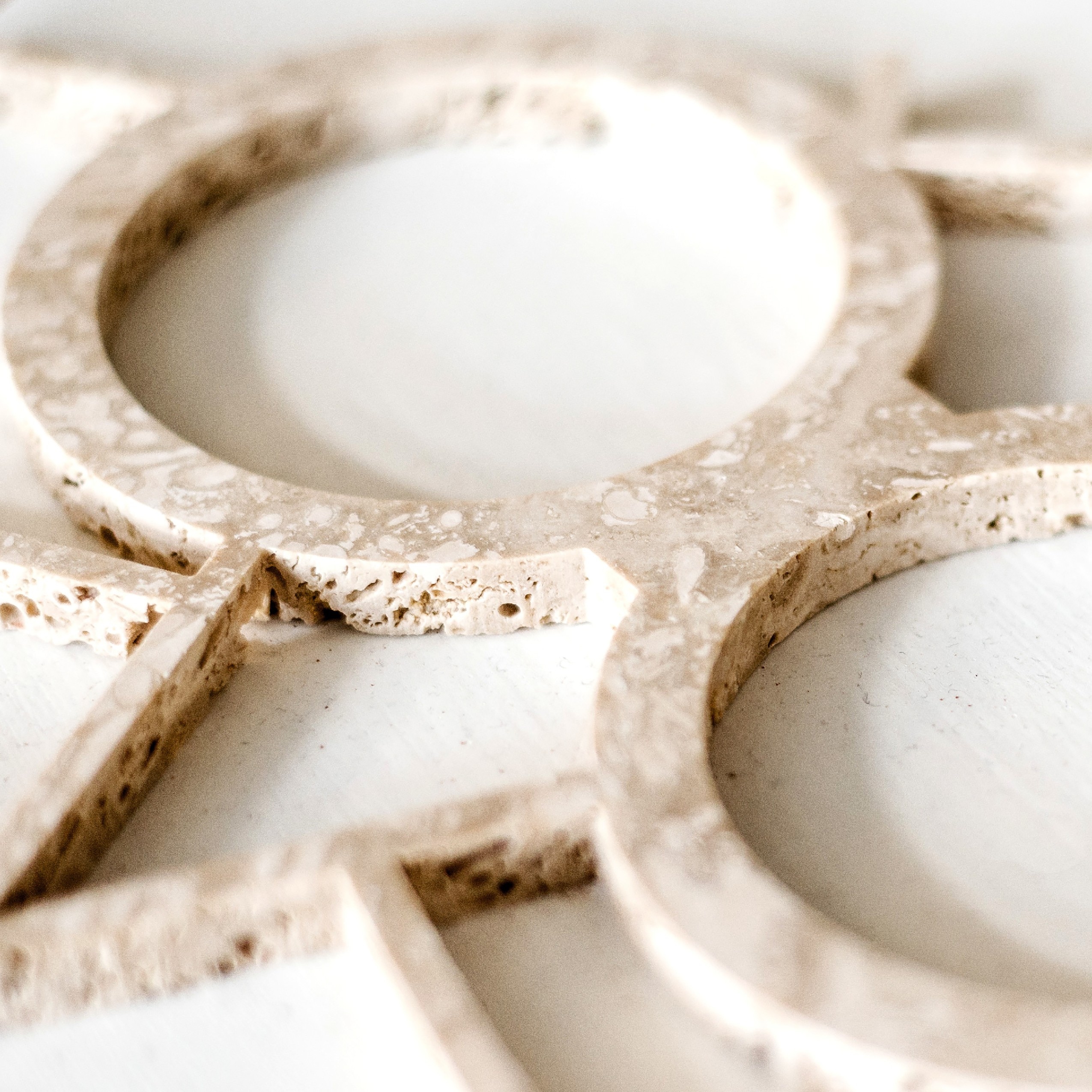
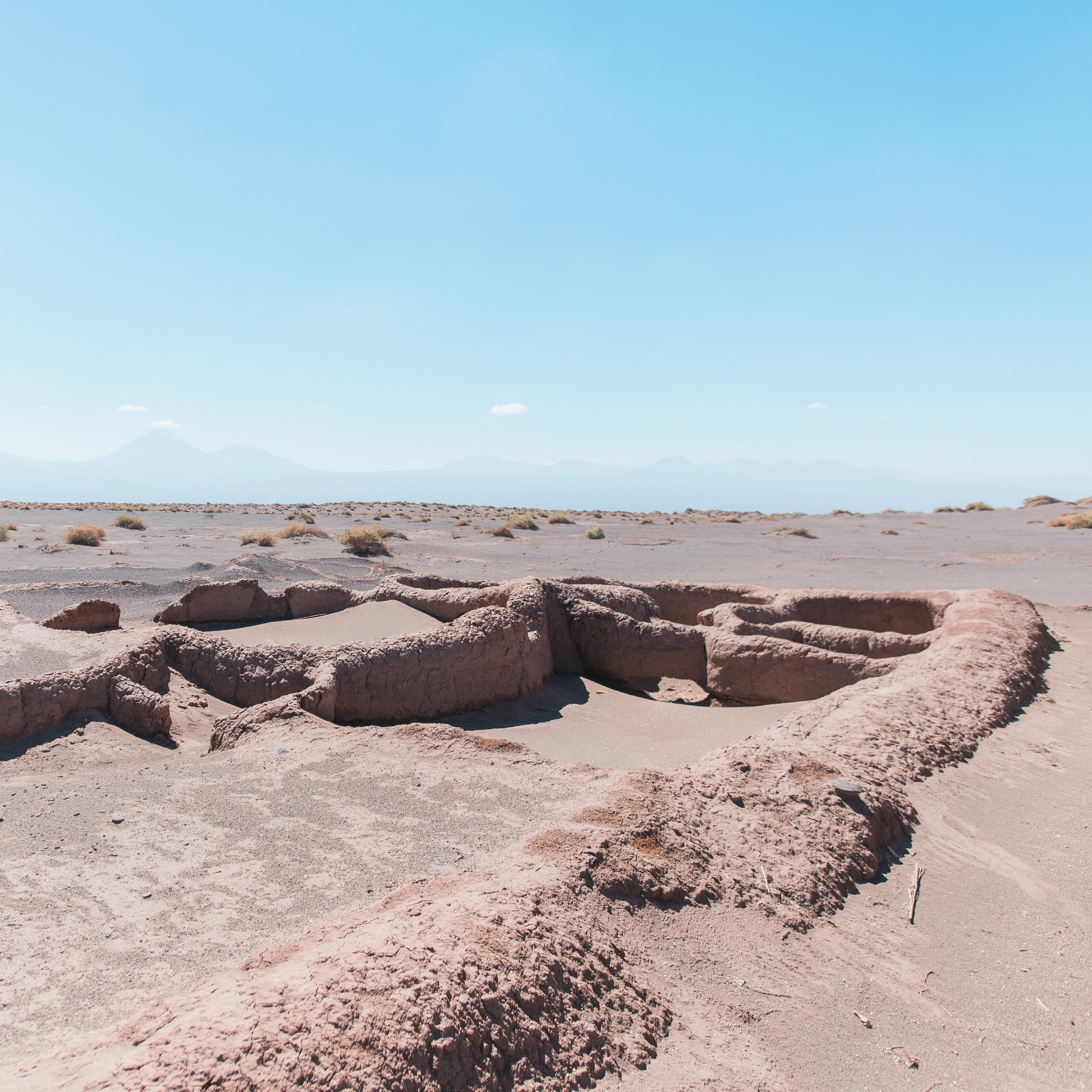
The ruins of Tulor are the base for this exploration, founded on a circular module, the morphology of the project is dissected to extract the logics of construction. A geometric analysis reveals recurring patterns throughout the ruins, the core of the project manifests itself through a tandem of circular huts, from which additional programs attached themselves to. The f inal rendition of Tulor is a mazelike circuit of linear and curved walls. It is possible to subdivide Tulor into a group of units, with similar program qualities but radically different formal qualities.
EXPLORING CONSTRUCTED THICKNESS
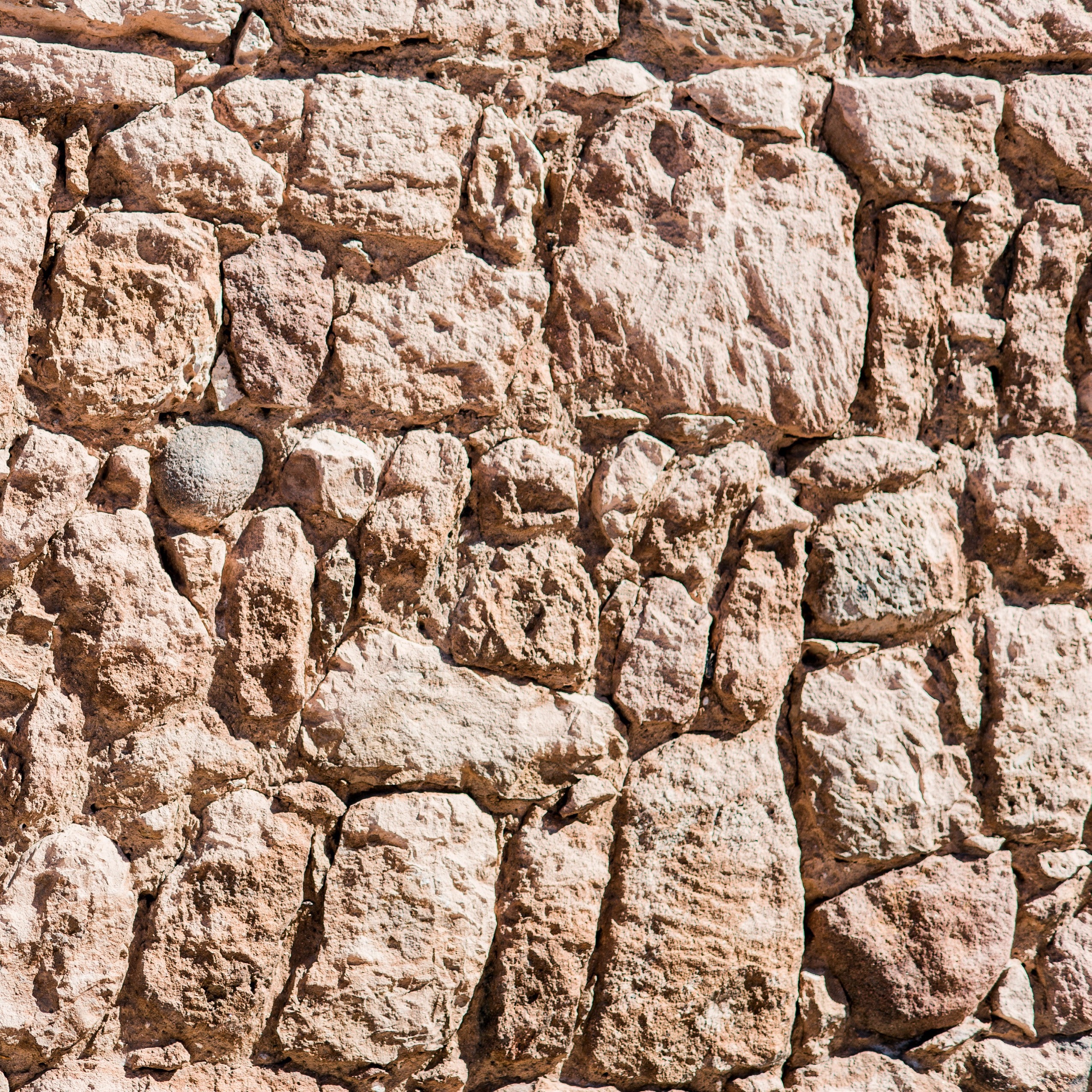
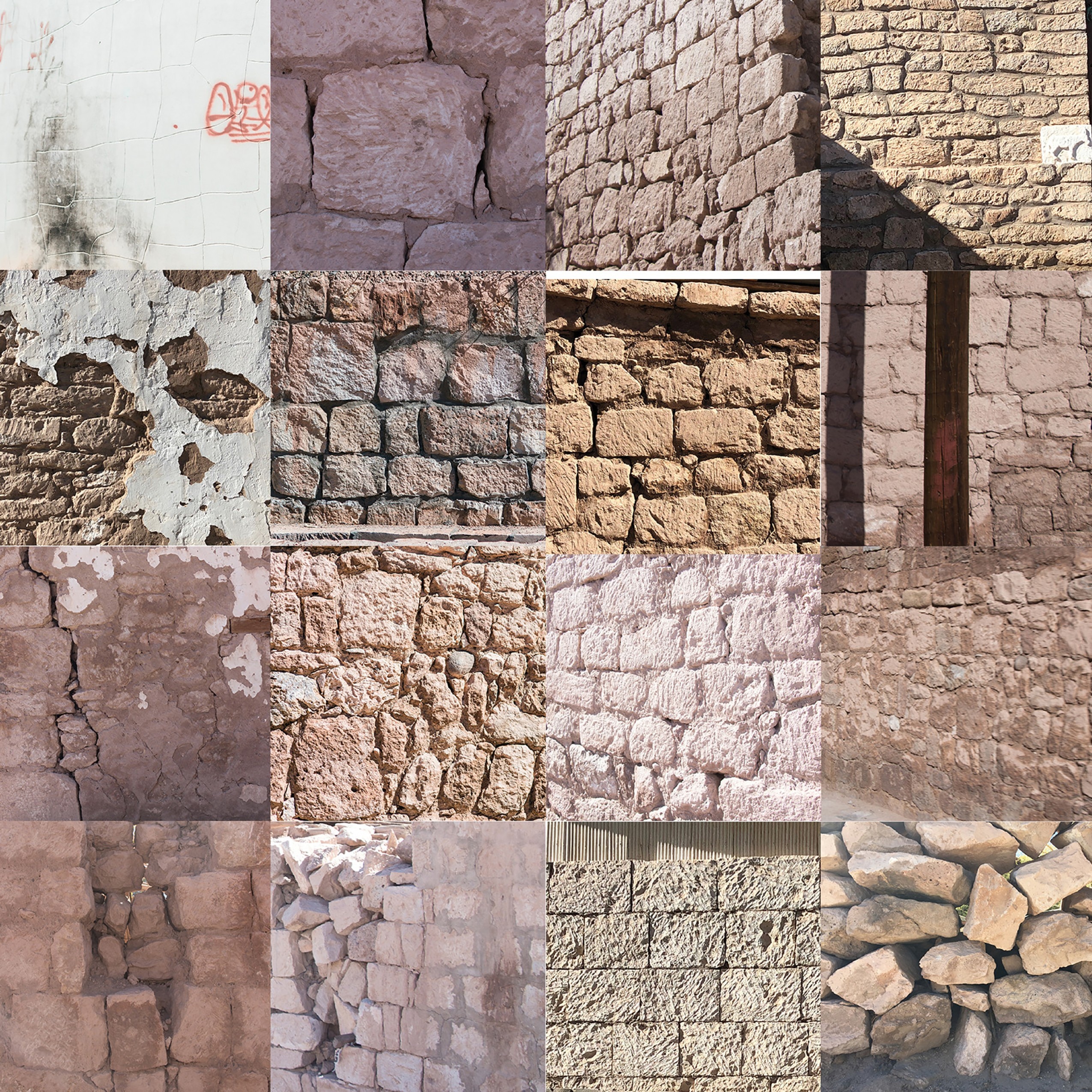
The project explores the Town of Toconao, located in the Atacama Desert of Chile. This town has been a continually inhabited site since 1557. The name Toconao comes for an indigenous language, meaning ‘Place of Stone.’ It refers to the Liparita volcanic stone, the towns predominant construction material. The Stone, used throughout the town, tells a story about the construction the towns structures over time. It begins to outline a potential constructive catalogue. This catalogue looks at the various structures found in the town, studying the constructs in section and elevation.
TRANSLATIONS FROM WALLS
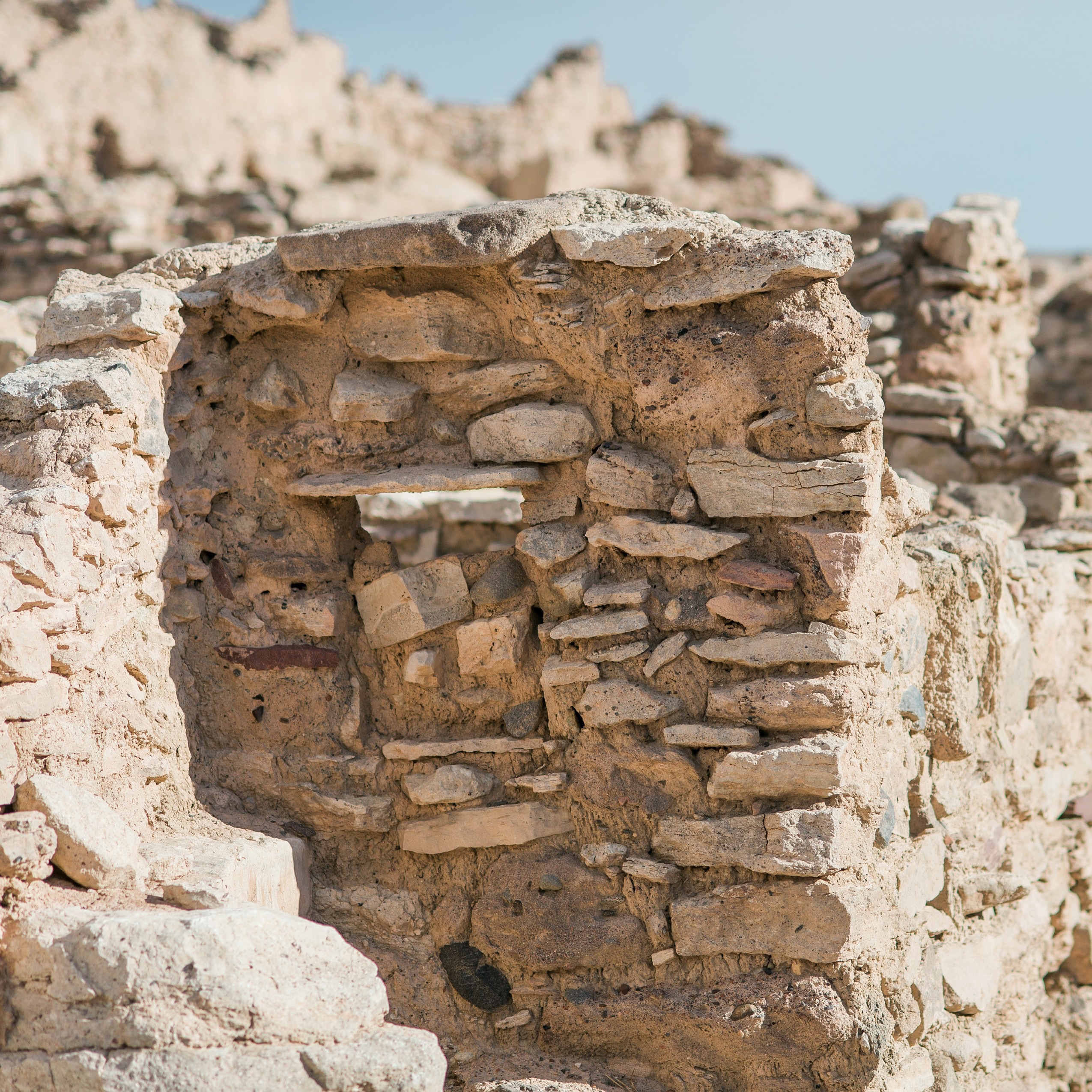
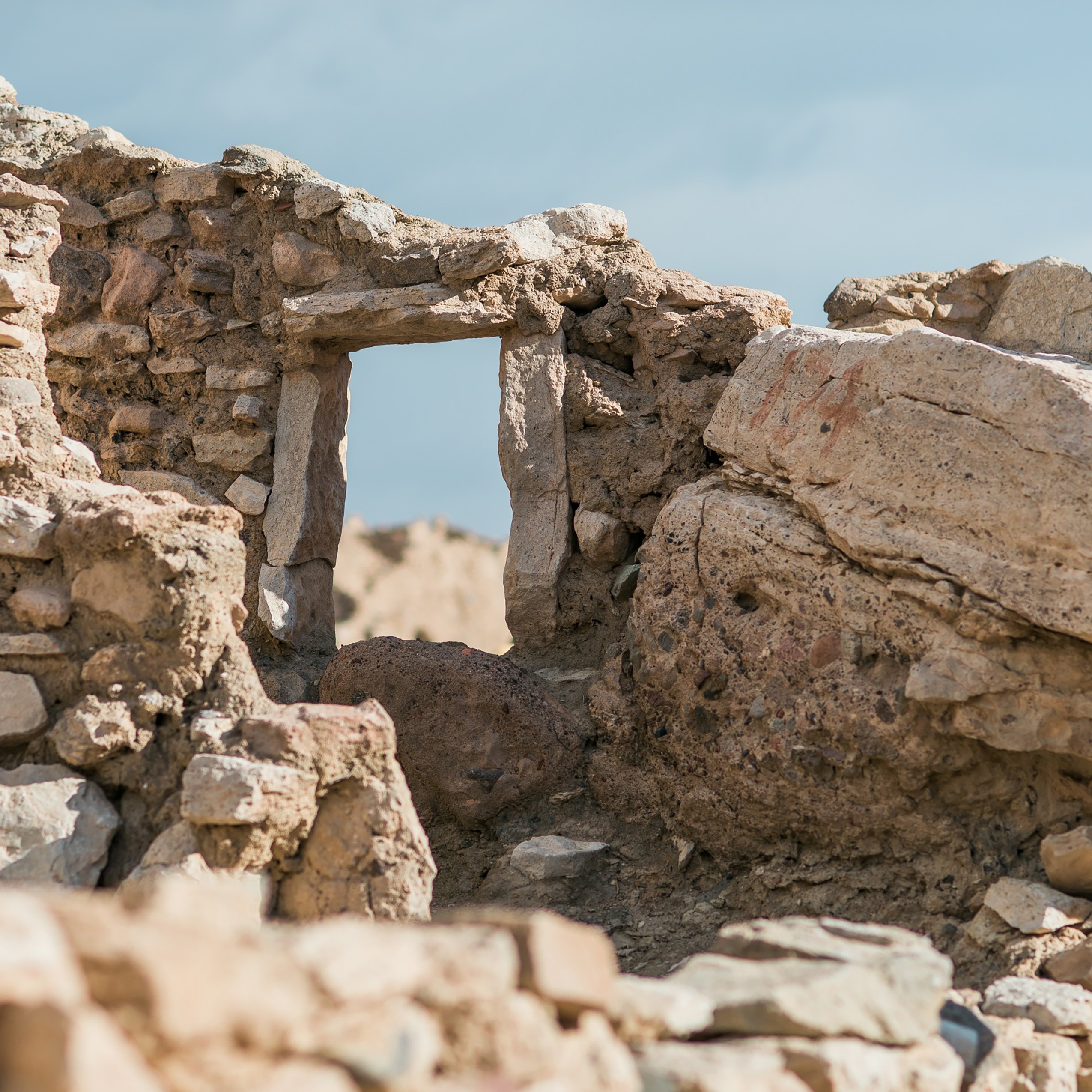
The walls of Lasana, a pukara built in the 12th century which exists today only as suggestive ruins, become the initial input in this exercise of architectural translations. This exercise posits three different possibilities of the original architecture of Lasana in order to suggest that any one reading is constructed not just of the walls but also of the formal, cultural biases of the translator. The three imaginary reconstructions are intended to open interpretations of the site in a way that might call into question the assumptions made to make the ruin a productive aesthetic study in the contemporary moment.
4. A SPACE FOR CULTURAL EXCHANGE
THE GATE
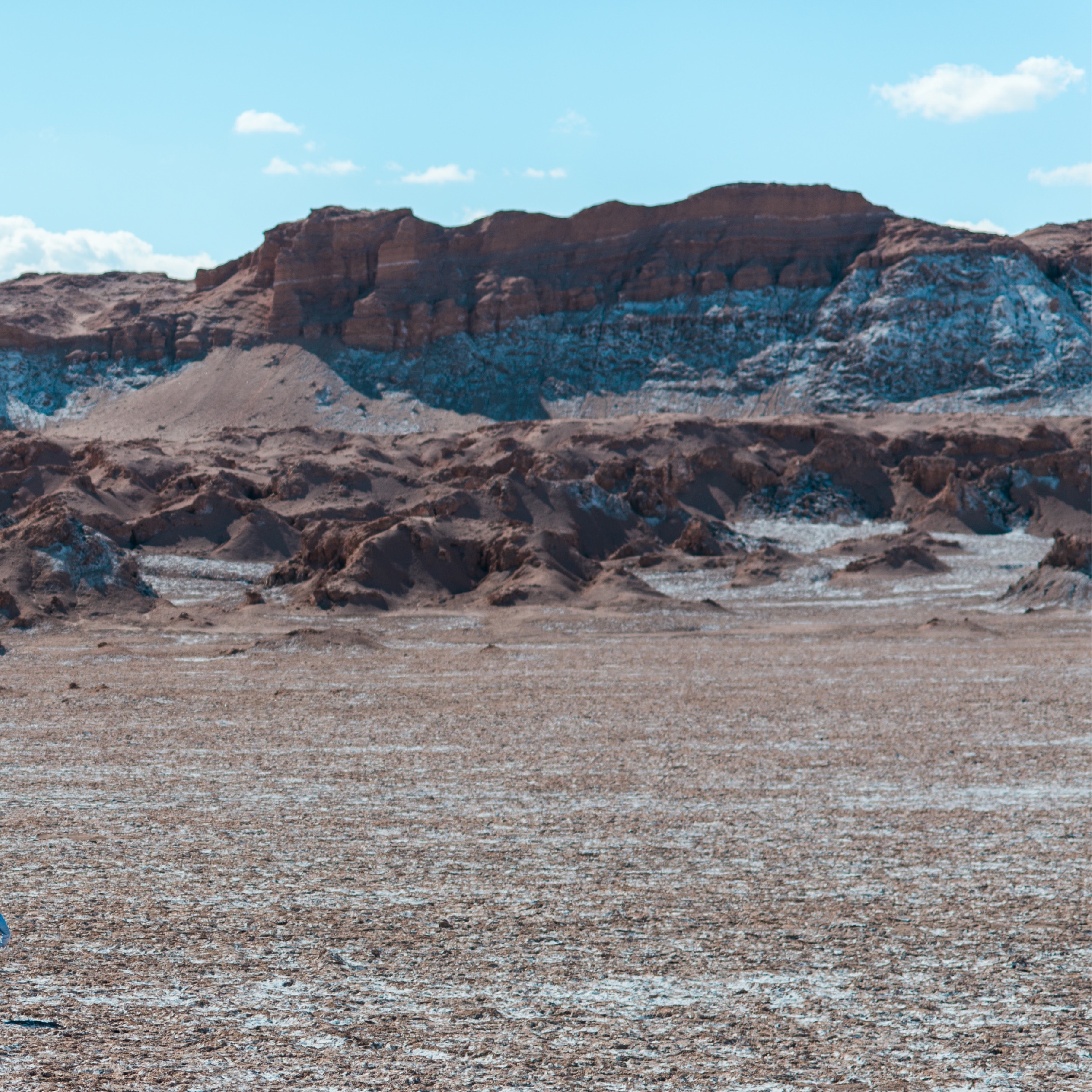
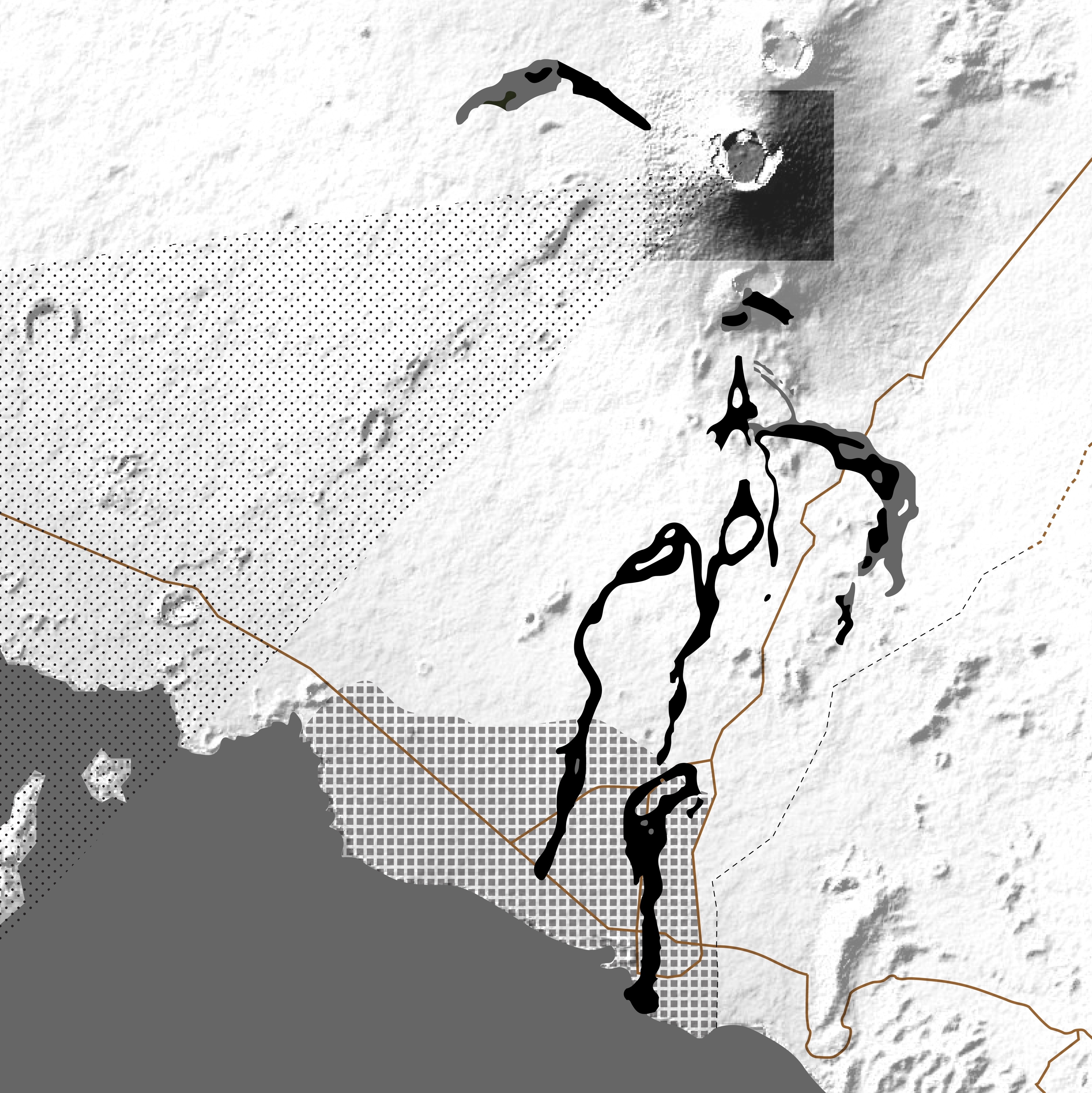
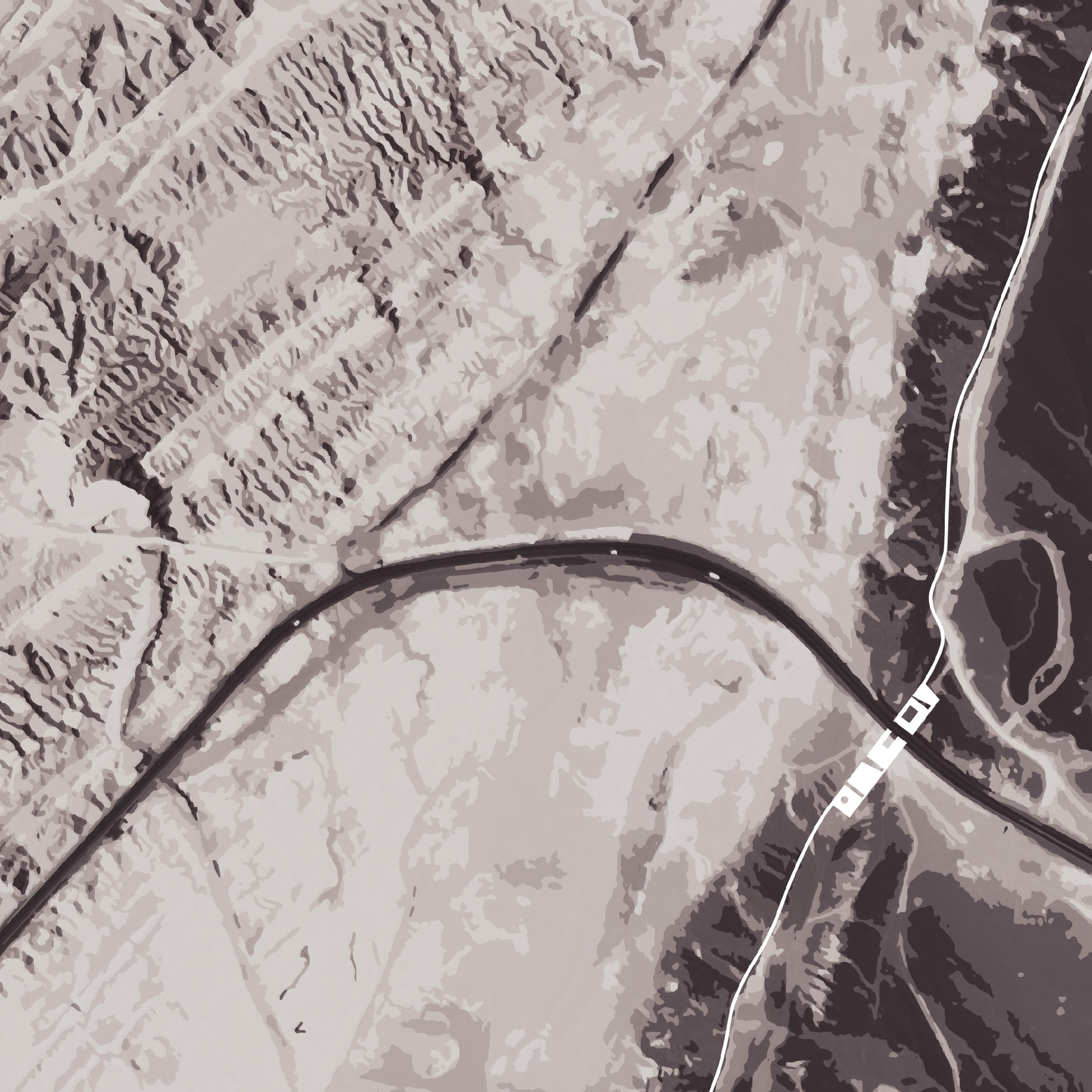
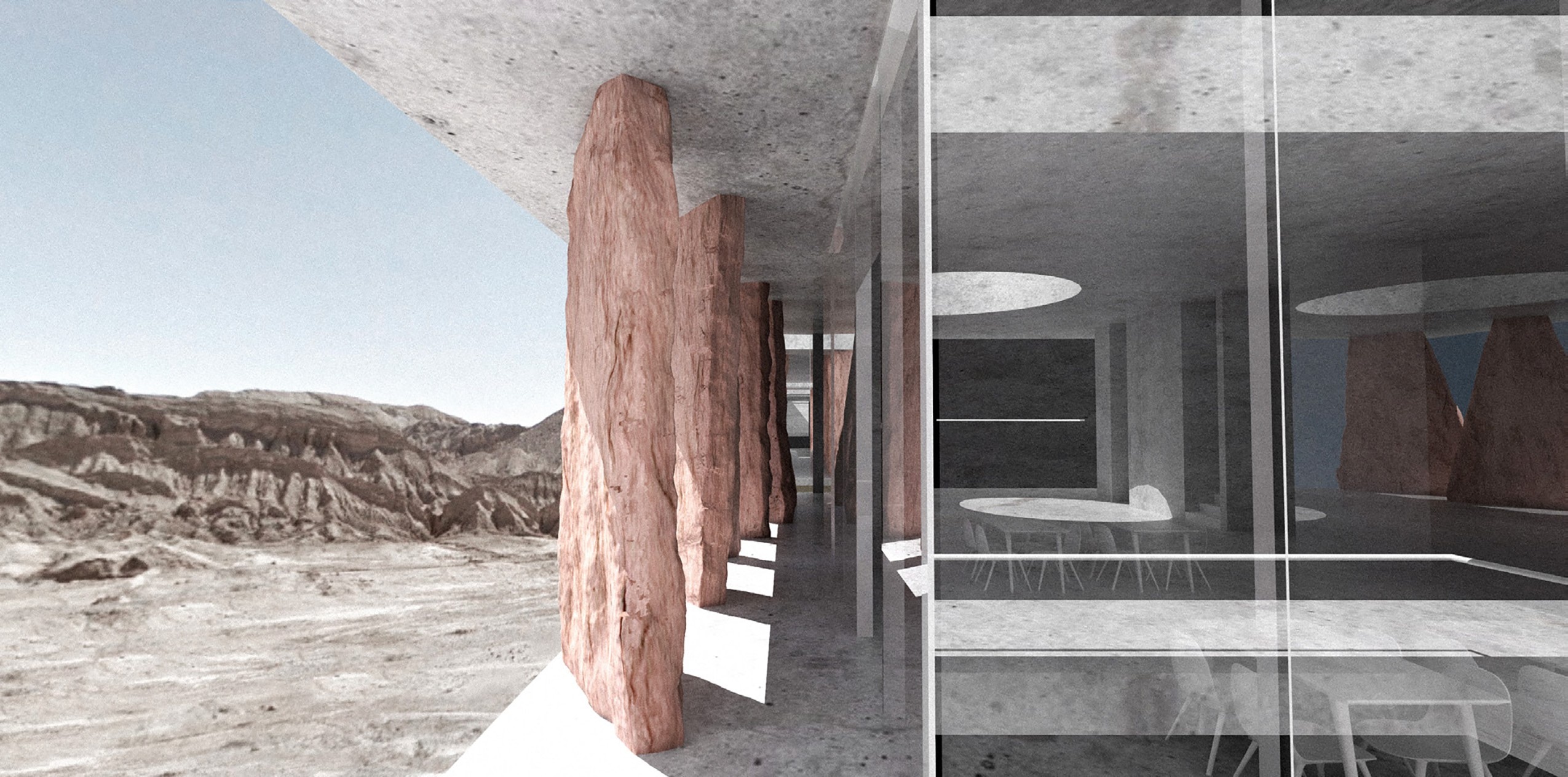
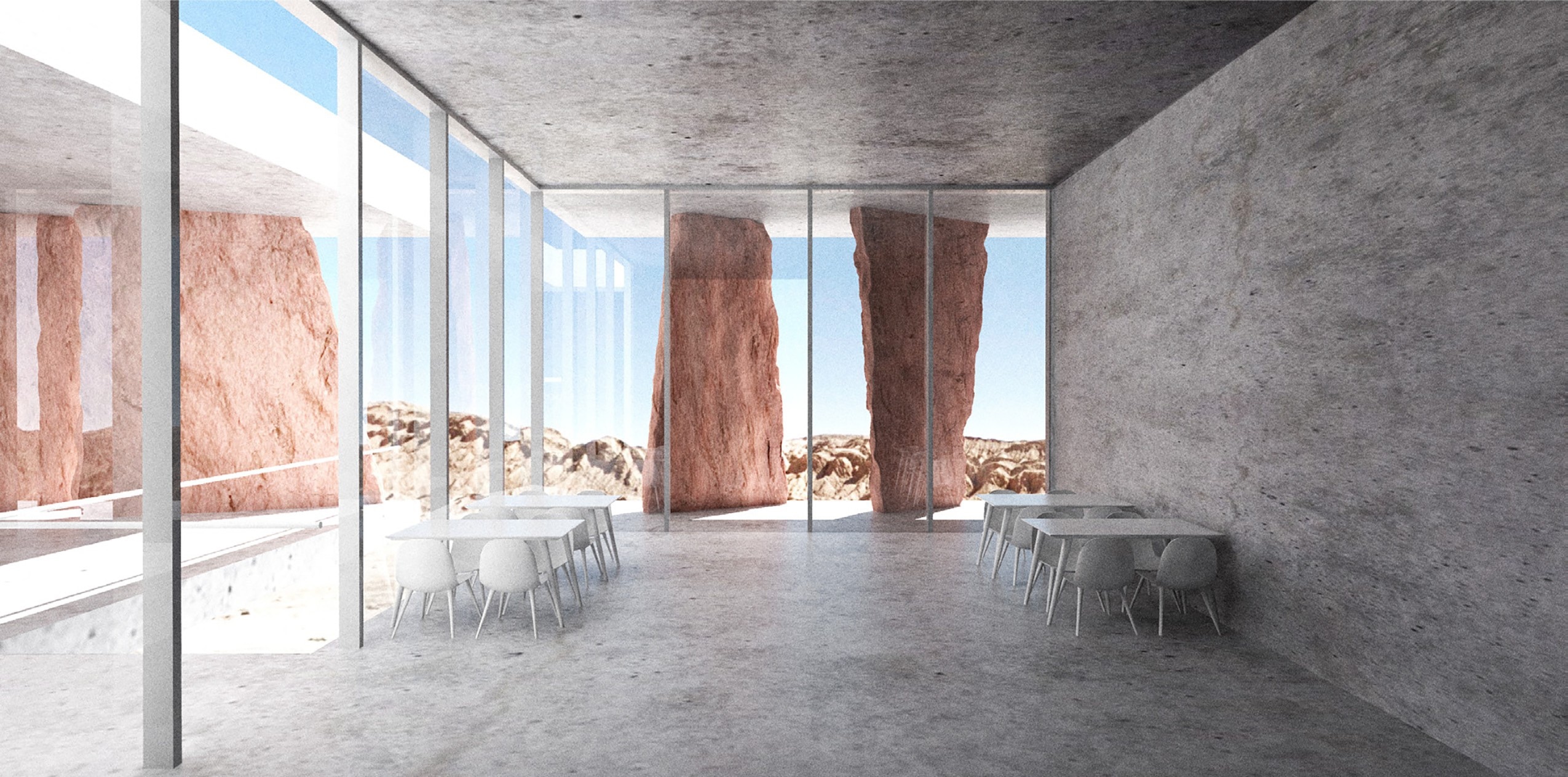
The Atacama Desert, situated in the North of Chile, serves as a crossroads between local indigenous communities, mining opportunities and international tourism. At the center, the oasis of San Pedro de Atacama serves as a gateway to the desert (...) The project appears in between the geomorphological artifacts and embeds itself in the hill precedes the entry into town. It sits at the intersection of two landscapes. The building positions itself on either side of the road, inserting itself as a marker for the town. The facade is composed of vertical carved rocks, mimicking the tectonics of the desert. The roof is a extends the existing topography, disappearing into the landscape, invisible when approached from the opposite side.
QUARRYING WORKSHOP
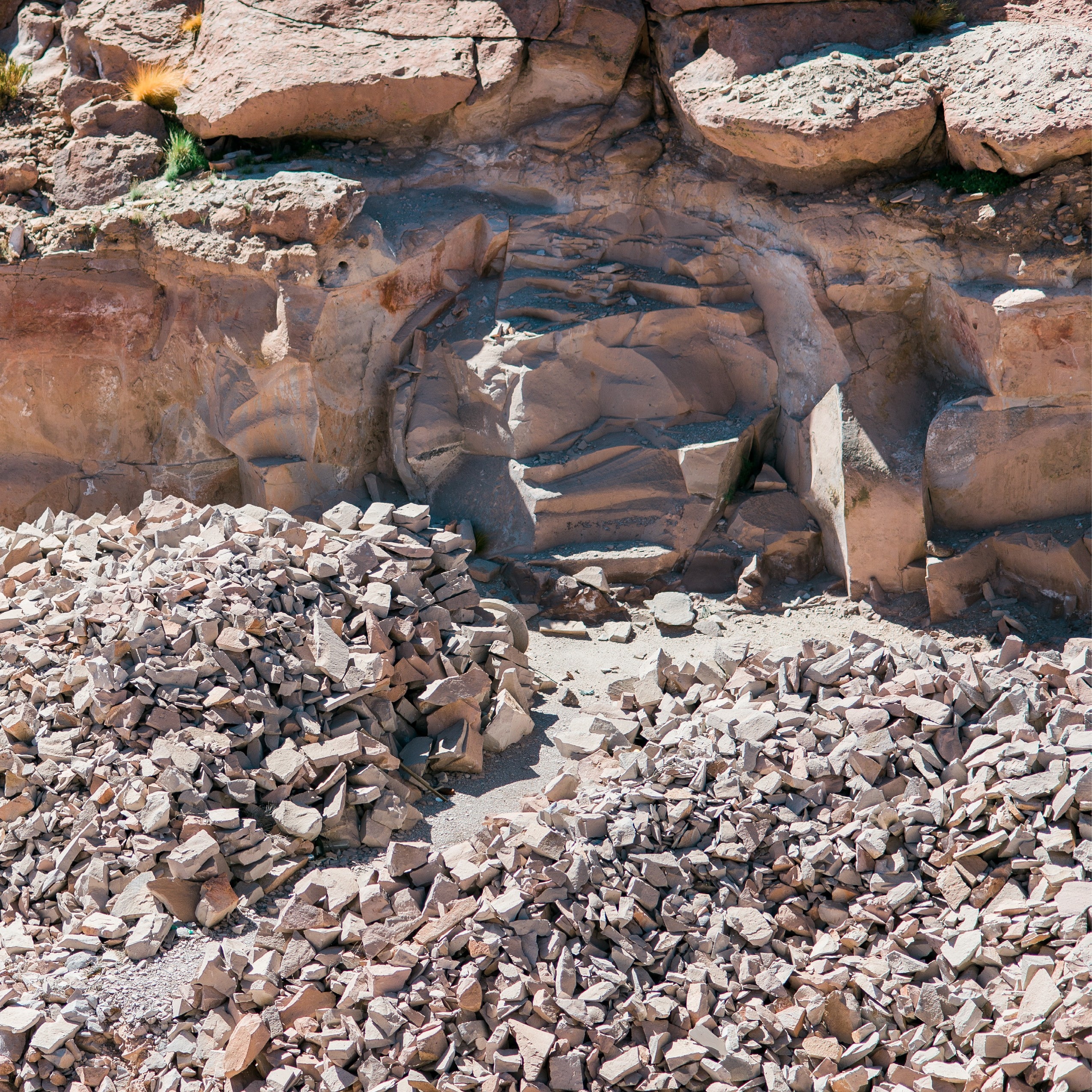
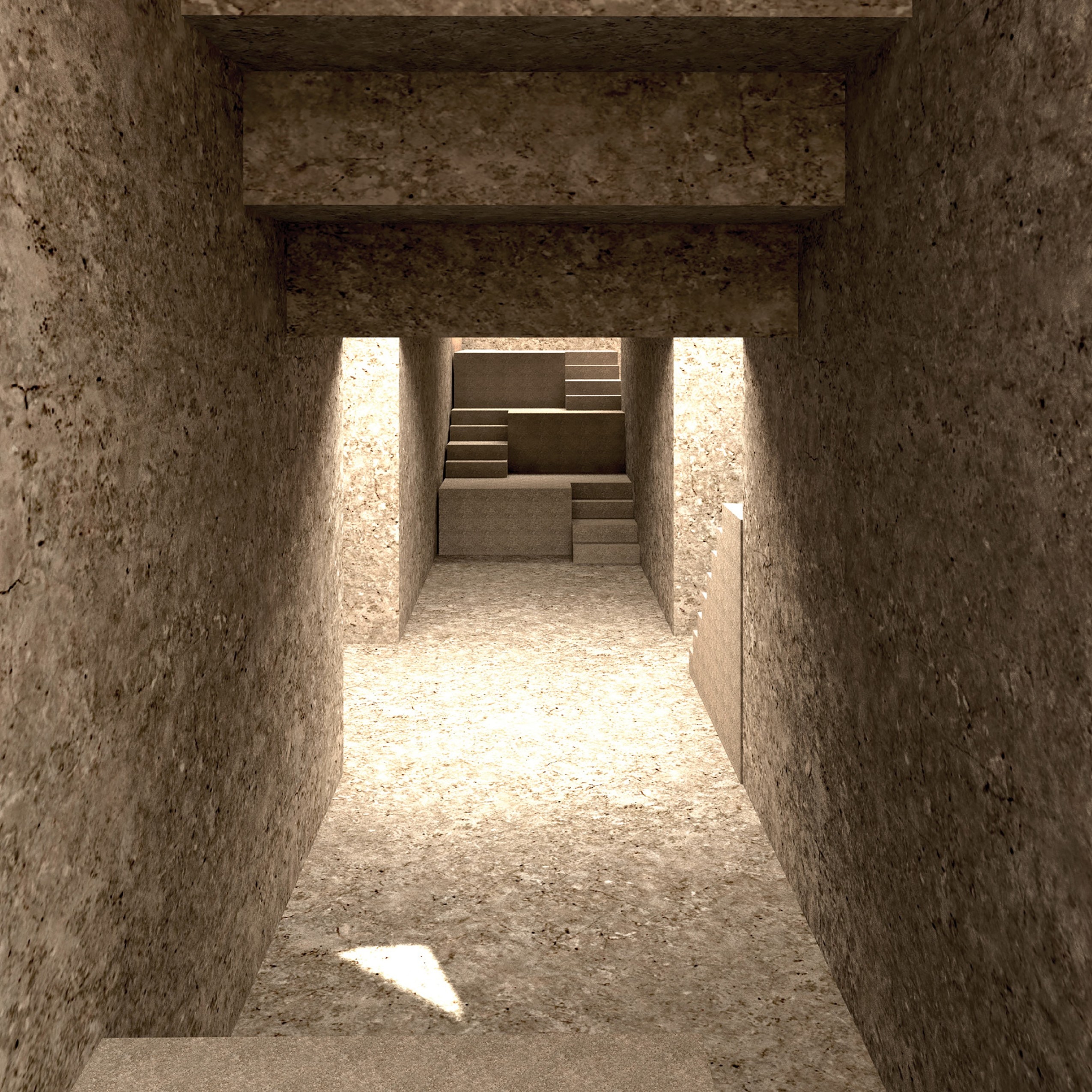
The cultural encounter found in the project lies in the understanding of the construction process and its relation to mining at the scale of the inhabitant. The spaces created will be used for lectures and galleries, as well as for the teaching of traditional stone construction techniques (...) Here locals and visitors alike will be able to have a tactile experience with the construction, carving and quarrying of a stone. Space is created through the translation of material and its resulting geometry. The trapezoidal shape allows for the creation of circulation and inhabitation.
CAPPING THE LAGOON
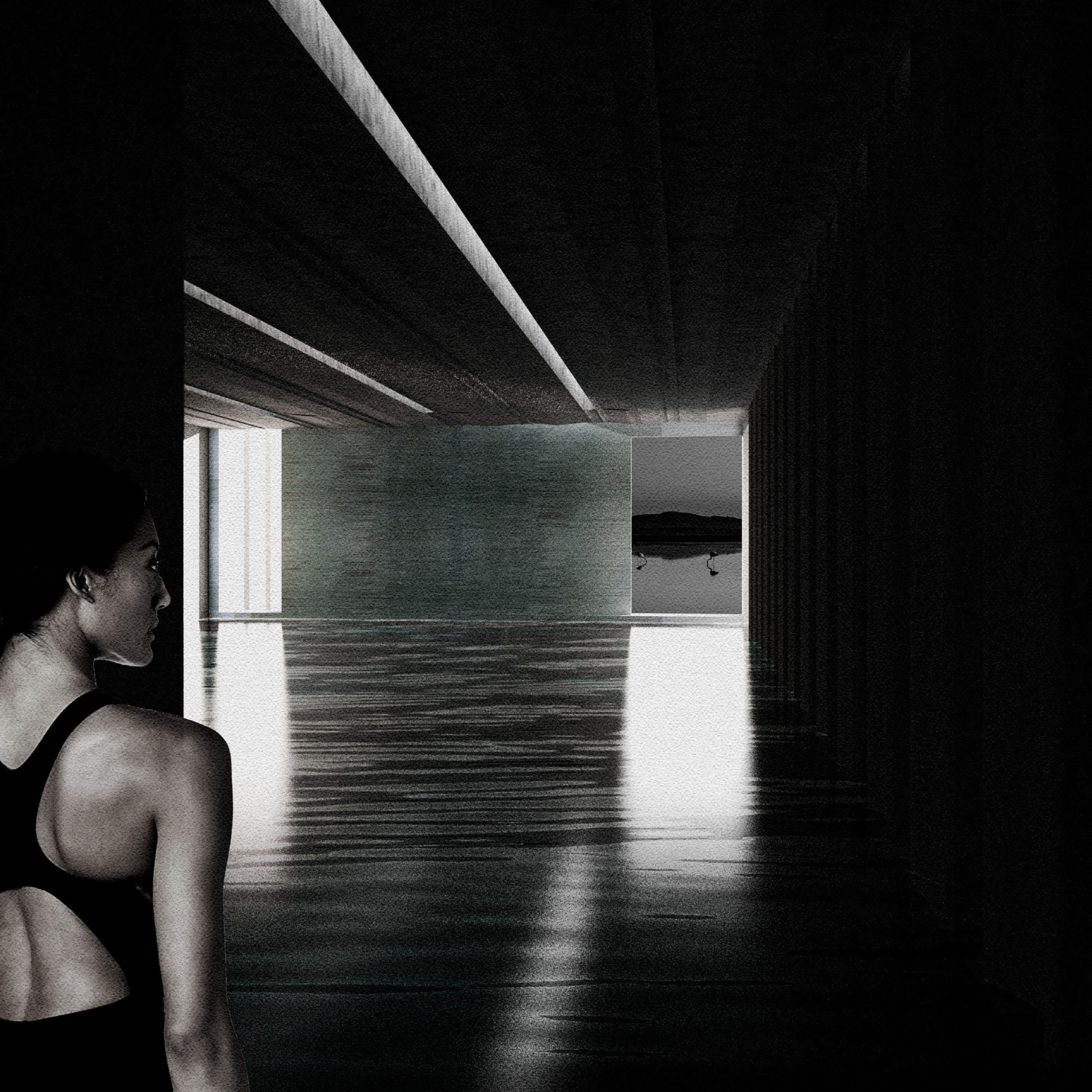
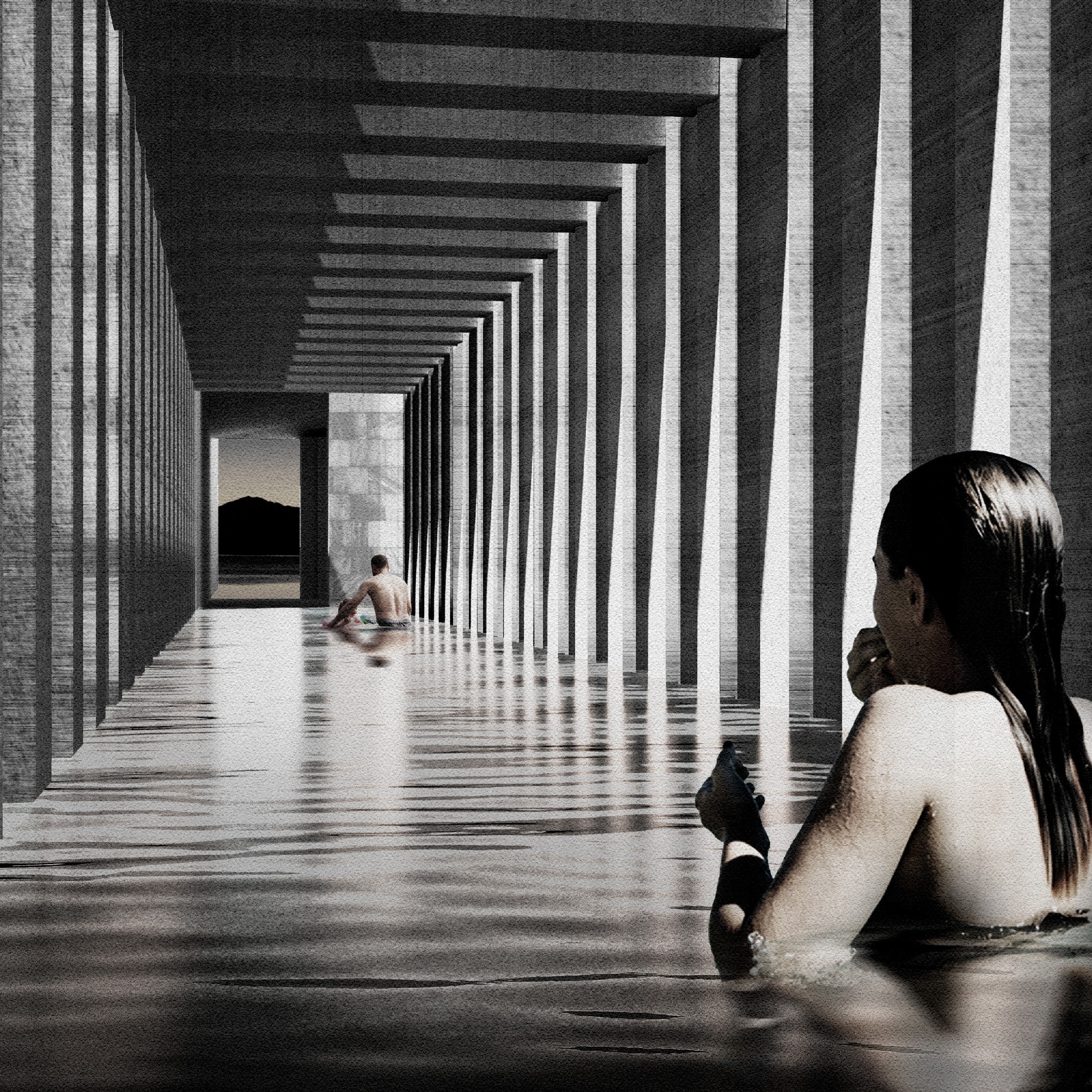
The project exists as a restraining architectural device, taking on the form of a bathhouse. It responds critically to the massive consumption of water as a result of present day lithium mining, appropriating an existing tourist destination, the Baltinache lagoon. The project considers the large scale consumption of water, as closely related to the utilization of the lagoon as a tourist resources. It therefore uses the architecture to restrain the accessible territory, limiting and then designing the designated area for bathing, with the hope of protecting the remainder of the existing lagoon landscape.